
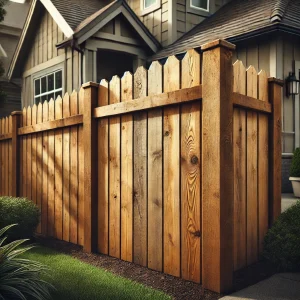
 Wood fence is a popular choice for homeowners due to their aesthetic appeal and affordability, but their lifespan can vary widely—from as little as 5 years to over 30 years—depending on the type of wood, local climate, and maintenance practices. This guide dives into these factors, offering insights to help you maximize your wood fence’s durability and make informed decisions for your property.
Factors Affecting Lifespan
Several elements determine how long your wood fence will endure, ranging from the type of wood to where it’s installed and how well it’s cared for. Here’s a breakdown of what influences its longevity.
Type of Wood and Durability
Different woods offer varying resistance to decay, insects, and wear, directly impacting lifespan. Cedar and redwood, with natural oils that repel pests and resist rot, can last 20–30 years with care—perfect for long-term beauty. Pressure-treated pine, a budget-friendly pick, typically endures 10–20 years, depending on treatment quality and sealing. Less durable options like spruce or fir may only last 5–10 years without treatment, making them better for short-term needs. Curious about material comparisons? Check out What type of fence is the most durable?.
Here’s a quick look at common fencing woods and their expected lifespans:
| Wood Type | Expected Lifespan (years) | Notes |
|---|---|---|
| Western Red Cedar | 20-30 | Naturally resistant to decay and insects, ideal for humid climates. |
| Redwood | 20-30 | Similar to cedar, durable with minimal maintenance in coastal areas. |
| Pressure-Treated Pine | 10-20 | Treated to resist rot, affordable but needs sealing for longevity. |
| Spruce | 5-10 | Low durability, needs treatment for fencing use. |
| Fir | 5-10 | Similar to spruce, better for short-term or treated applications. |
Climate Impact
Where your fence lives matters. In humid or wet climates—like Florida or the Southeast—wood faces rot and fungal growth, cutting its life short without extra sealing. In dry climates, like Arizona, cracking is a risk, though rot’s less likely; temperature swings can still weaken it. Regular inspections catch issues early—think rot in the rain or cracks in the desert. For more on installation in tough climates, see How do I mount a fence post?.
Maintenance Practices
Maintenance is your best tool to stretch a wood fence’s life. Here’s how:
- Regular Inspections: Check for damage, rot, or loose boards—fixing a rotted post early can save the whole fence.
- Staining or Sealing: Apply a preservative or sealer every 1–3 years to shield against moisture, UV rays, and bugs—doubling lifespan in humid spots.
- Cleaning: Clear dirt, debris, and plants to avoid moisture traps, especially near coastlines or dense greenery.
Start with quality wood (cedar, redwood, or treated pine), ensure solid installation with deep posts, and seal it before and after setup. For upkeep tips, explore maintaining a vinyl fence—some tricks overlap.
Conclusion and User Guidance
A wood fence’s life hinges on wood choice, climate, and care. Cedar or redwood can hit 20–30 years, pressure-treated pine 10–20 years, with proper steps. Pick wisely, seal regularly, and inspect often to keep it standing strong. Compare options with our aluminum fence guide or ask the right questions when hiring a pro.
Related FAQs and Resources
- What is the average lifespan of a fence? – See wood vs. other materials.
- What is the average cost of a fence? – Weigh cost against lifespan.
- Fence Articles – Dive deeper into fencing insights.
Sources
- Forest Products Laboratory – USDA
Add a Comment