
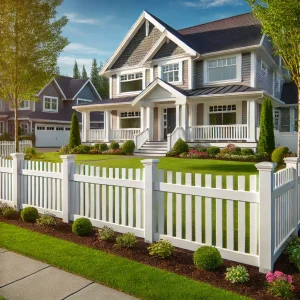
 Vinyl fence fabrication is where the magic happens—turning raw vinyl into the sleek, sturdy fences you see around homes and yards. It’s the hands-on process of cutting, shaping, and piecing together vinyl extrusions, then welding or bolting them into panels, posts, or gates, complete with hinges and latches. Done by manufacturers or skilled installers, it’s all about precision and durability, using specialized gear to craft a fence that lasts. Curious how it goes from plastic blob to backyard beauty? Let’s break down the steps and see what’s involved.
What Happens in Vinyl Fence Fabrication?
Fabrication is the bridge from vinyl raw materials to finished fence—here’s the rundown:
- Cutting and Shaping: Vinyl extrusions—long PVC pieces—are sliced and molded into posts, rails, or pickets—see What is vinyl fence made of?.
- Joining: Pieces are welded—heat-fused—or attached with screws, rivets, or adhesive for a tight bond.
- Hardware: Hinges, latches, and handles get added—think gates that swing smooth and lock tight.
Example: A 6-foot privacy panel starts as flat extrusions, then gets cut, welded, and fitted with a latch—all in one go.
The Fabrication Process
It’s a craft—here’s how it unfolds:
Tools of the Trade
- What’s Used: Saws trim lengths, welders fuse joints, drills punch holes—specialized gear for precision.
- Why: Ensures every cut fits and every bond holds—keeps it sturdy—see What is the average lifespan of a fence?.
- Example: A sawed rail slots perfectly into a post—no gaps, no wobble.
Assembly Options
- What’s Done: Panels can be fully assembled—ready to install—or left “knocked down” (unassembled) for shipping—think What are the typical sizes of vinyl fence panels?.
- Why: Knocked-down kits save space; pre-assembled saves time—your call.
- Example: A pre-assembled gate goes up fast; a kit needs on-site snaps.
Why Fabrication Matters
It’s not just assembly—it’s quality control:
- Strength: Tight welds and thick walls—see What is the wall thickness of a vinyl fence?—mean no sagging gates—check How do you prevent a vinyl gate from sagging?.
- Fit: Custom cuts match your yard—perfect for slopes—see Can I install vinyl fencing on a slope?.
- Finish: Smooth joins keep it safe—no snags—see Is vinyl fence safe?.
Practical Tips
- Know the Process: Ask if it’s pre-assembled or knocked down—impacts install time.
- Hire Smart: Pros nail fabrication—use 25+ Essential Questions to Ask Your Fence Contractor.
- Clean It Up: Post-install rinse keeps it sharp—see What should I use to clean my vinyl fence?.
Final Thoughts
Vinyl fence fabrication crafts tough, sleek fences—cutting, welding, and rigging extrusions into panels or gates with precision gear. Whether pre-assembled or knocked down, it’s the backbone of a durable, low-maintenance barrier—ready for your yard or pool—see What should be done to make a fence pool code compliant?. Explore more in our vinyl fence guide or costs at Vinyl Fencing vs. Wood Fencing – Long Term Costs. Ready for a fence that’s built right?
Related FAQs and Resources
- What is the average cost of a fence? – Budget for quality.
- What type of fence is the most durable? – Vinyl’s edge.
- 25+ Essential Questions to Ask Your Fence Contractor – Ask about fabrication.